19 Nov
AcceptRemote and RemoteReadyMove joint webinar series

Joint events

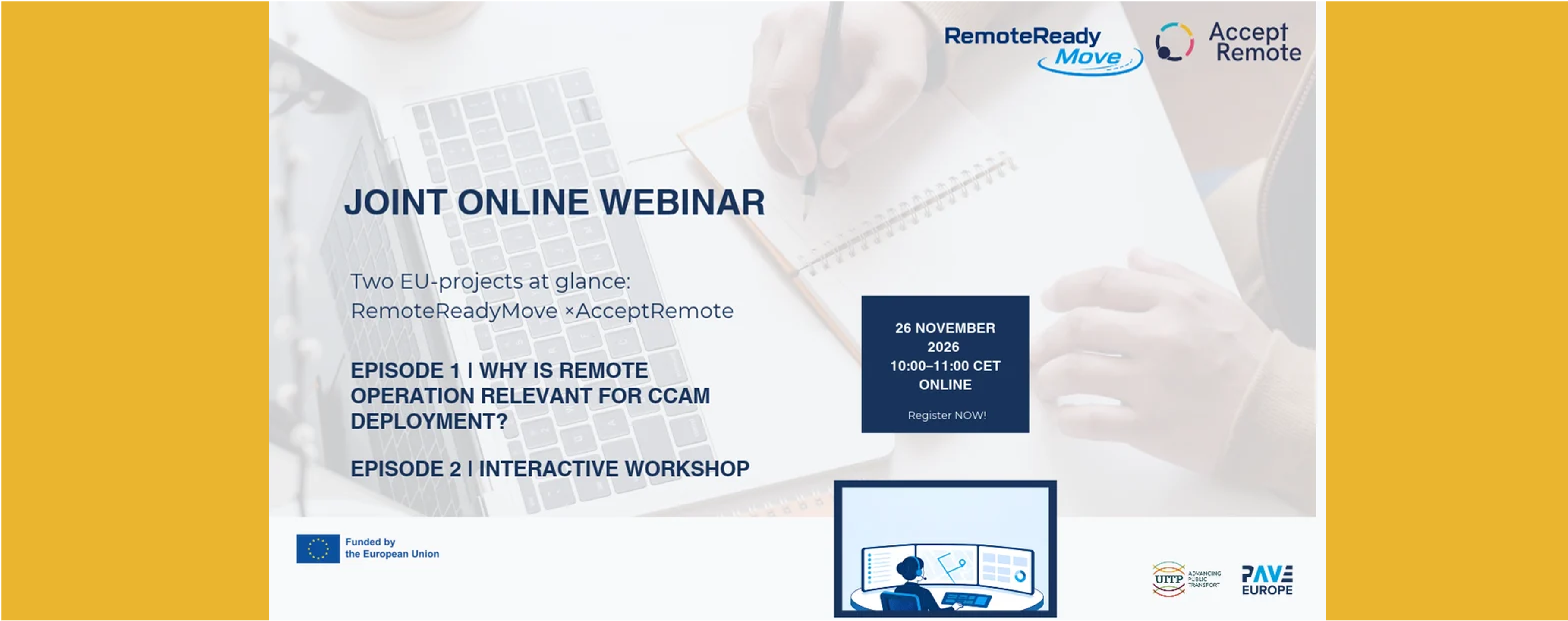
AcceptRemote and RemoteReadyMove: Joint Webinar and Workshop on Remote Operations

AcceptRemote and RemoteReadyMove, two Horizon Europe projects addressing the societal readiness of connected, cooperative and automated mobility (CCAM), are organising two joint online events on 26 November and 7 December 2026. The events will explore the role of remote operations in supporting the deployment of automated mobility services, with a focus on practical implementation, operational challenges and societal requirements.

The first event will introduce the projects' approaches and use cases, while the second will provide an opportunity for more detailed discussions on the requirements for deploying remote operations in passenger and freight services.

Episode 1 | Why is remote operation relevant for CCAM deployment?

Thursday, 26 November 2026 | 10:00–11:00 CET | Online

Remote operations can provide support when automated vehicles encounter situations requiring human intervention. However, integrating this capability into everyday mobility services raises questions about technical implementation, operational procedures and the roles of remote operators.

The first webinar will address these questions through presentations and discussion, covering:

  • Project approaches and expected outcomes: Flavien Massi (Netcompany), coordinator of AcceptRemote, and Anna Schieben (German Aerospace Center – DLR), coordinator of RemoteReadyMove, will introduce the two projects, their use cases and expected outcomes.
  • Remote operation in practice: Simon Stuer, Lead Supervisor at holo, a PAVE Europe member, will present a practical example of remote operation.
  • Moderated discussion: The speakers will discuss how the projects' work connects and where their approaches complement each other.
  • Live Q&A: Participants will have an opportunity to ask questions and learn more about the follow-up workshop.

Registration: Register for Episode 1


Episode 2 | Practical Workshop: Operational and Societal Requirements for Deploying Remote Operation in Passenger and Freight Services

Monday, 7 December 2026 | 12:00–13:30 CET | Online

The second event will build on the introductory webinar through an interactive workshop focusing on the operational and societal requirements for deploying remote operations in passenger and freight mobility services.

The workshop will explore deployment challenges, stakeholder needs and the conditions required to support the integration of remote operations into CCAM services. It will provide an opportunity for participants to exchange perspectives on practical requirements and societal considerations, contributing to a broader understanding of the challenges involved in implementing remote mobility solutions.

Registration: Register for Episode 2


Who should attend?

Both events are relevant to public authorities, public transport and logistics operators, automated mobility and technology providers, researchers, safety and regulatory bodies, and organisations representing passengers and other road users.

Through these joint activities, AcceptRemote and RemoteReadyMove aim to facilitate knowledge exchange between the two projects and engage relevant stakeholders in discussions on the future deployment of remote operations in CCAM.
30 Sep
IIKI2026

Scientific dissemination

AcceptRemote research presented at IIKI 2026

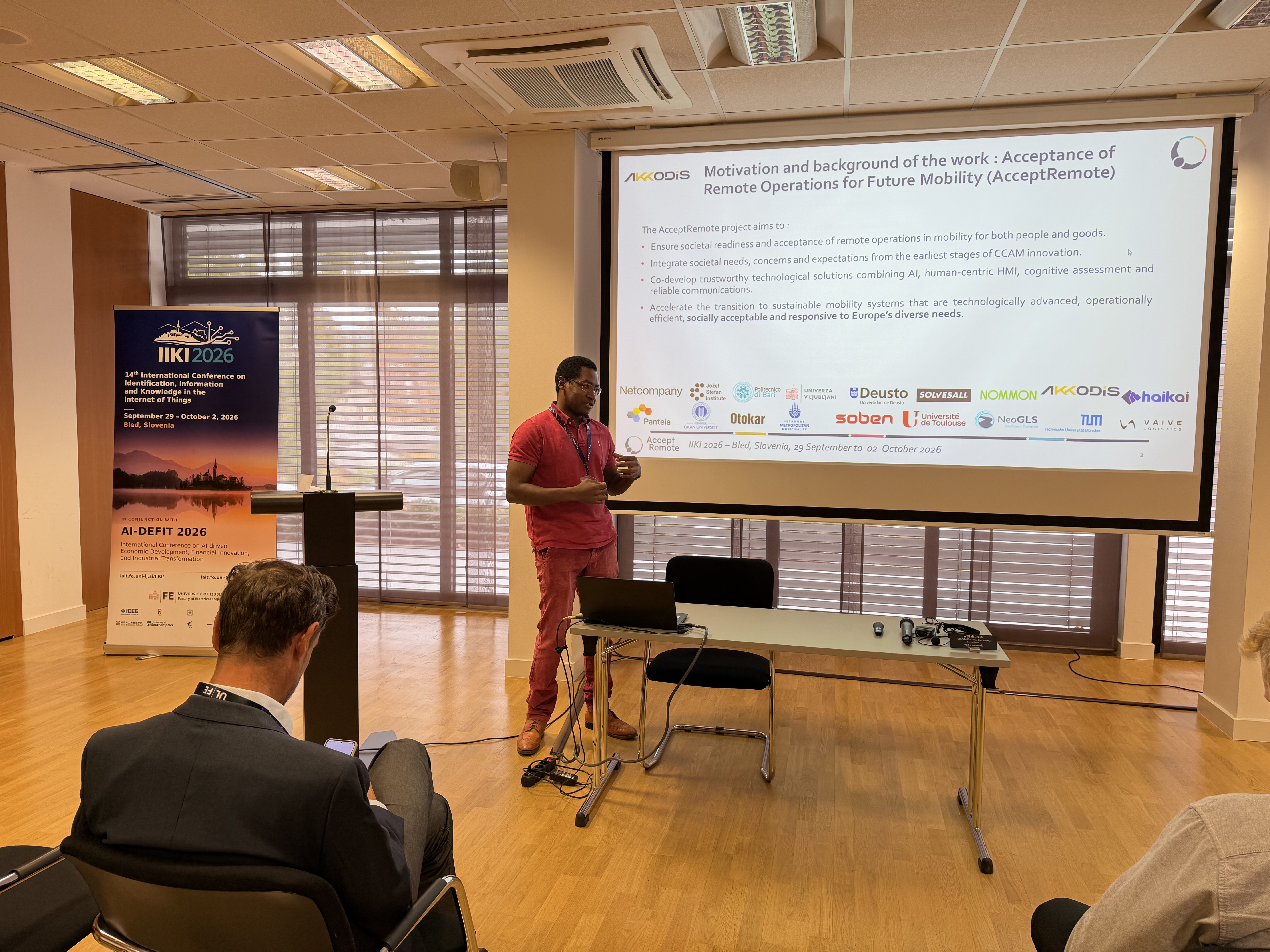
Researchers from the AcceptRemote consortium presented their work at the International Conference on Identification, Information and Knowledge in the Internet of Things (IIKI 2026), held from 29 September to 2 October 2026 in Bled, Slovenia.

Djibrilla Amadou Kountche from Akkodis presented the paper “An Interdisciplinary Approach for Training, Evaluating and Monitoring CCAM Remote Operators”, developed jointly by researchers from six AcceptRemote partner organisations: Akkodis, University of Ljubljana, Jožef Stefan Institute, Politecnico di Bari, Okan University and Otokar.

The paper introduces an interdisciplinary approach to training, evaluating and monitoring remote operators of CCAM systems. It combines physiological monitoring, behavioural observation, ergonomic assessment and human-centred interface design to better understand operator performance, cognitive workload, situational awareness and well-being.

A key element of the proposed approach is a simulation-based training environment that will allow remote operators to practise and be evaluated under different traffic and communication conditions. The research also addresses the development of human–machine interfaces designed to support operators in monitoring automated vehicles and responding to situations requiring intervention.

The proposed methodology will be further developed and validated through the three AcceptRemote pilots: RideCare in Istanbul, LogiCare in Toulouse and FlexiCare in Munich, covering passenger transport, freight logistics and mixed mobility services.

The presentation, delivered as part of the conference’s Connected and Automated Driving session, provided an opportunity to share this early project research with the scientific community.

Following the conference, the authors were invited to submit an extended version of their paper to a special issue of the journal Sensors.

16 Sep
General Assembly Meeting in Bari

General Assembly

General Assembly Meeting in Bari

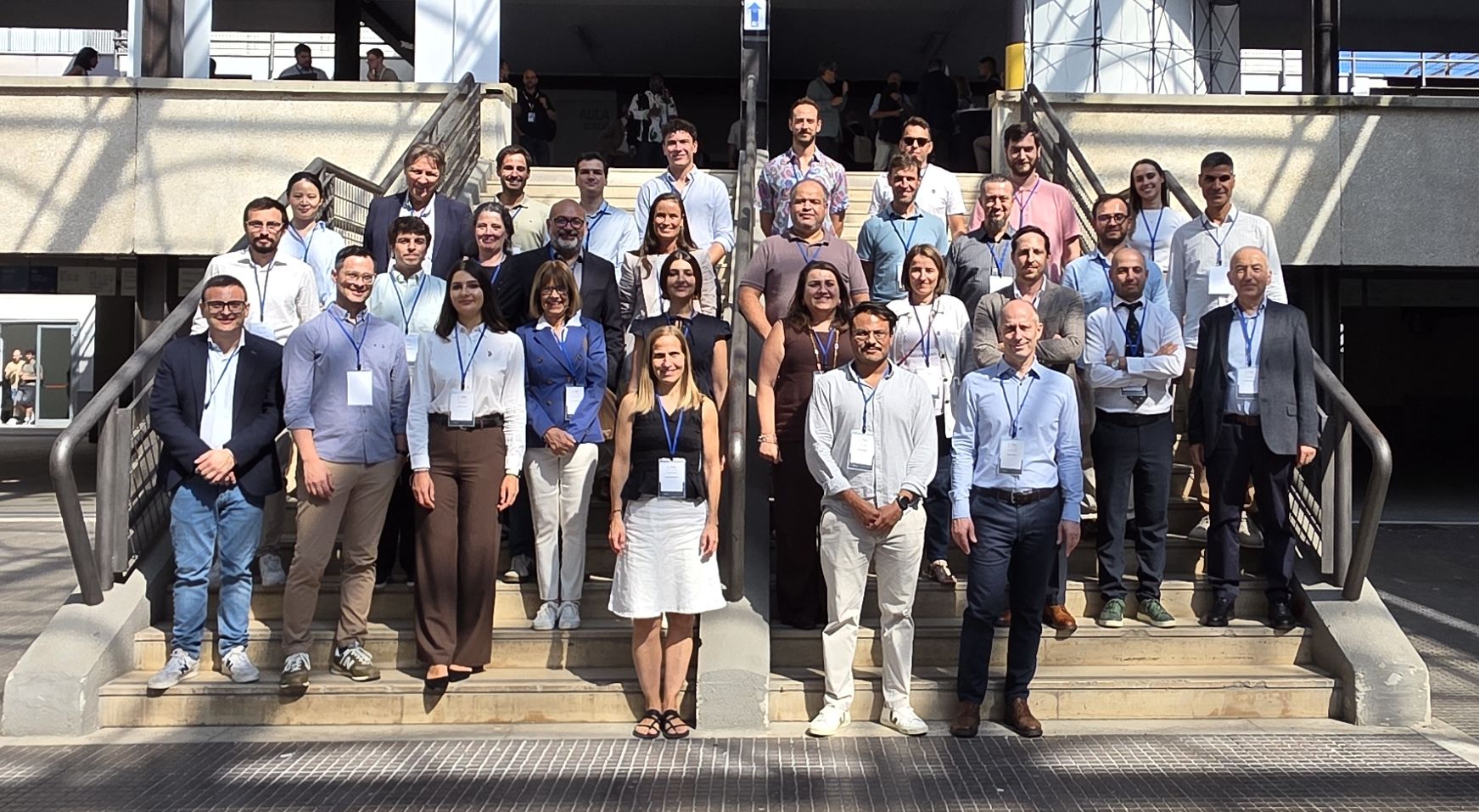
The AcceptRemote consortium held its General Assembly on 15–16 September 2026 in Bari, Italy, hosted by Politecnico di Bari. The two-day meeting brought project partners together to review progress since the project started in May 2026, coordinate ongoing activities and discuss the next steps in developing and validating remote operation solutions.

Reviewing progress and aligning project activities

The first day focused on reviewing the work carried out across the project’s work packages and examining how the different research activities were beginning to connect.

Discussions covered the societal and human factors relevant to remote operations, alongside technical developments in system architecture, connectivity, AI-supported functions and human–machine interaction. Particular attention was given to how these activities would contribute to the three AcceptRemote pilots: RideCare in Istanbul, LogiCare in Toulouse and FlexiCare in Munich.

The discussions highlighted the importance of coordinating technological development, societal readiness activities and pilot preparations from the early stages of the project.

Exploring stakeholder needs and pilot requirements

The second day was dedicated to two interactive workshops, both organised around the three pilot scenarios.

The first workshop focused on stakeholder needs and expectations regarding remote operations. Working in pilot-specific groups, partners considered the needs, concerns and expected benefits of different actor groups and prioritised the issues requiring particular attention during the project’s co-design and co-development activities. Discussions covered aspects such as trust, predictability, inclusiveness, training, technical capabilities and potential benefits for operators, users and wider society.

The second workshop addressed pilot requirements, constraints and architecture. Building on the initial pilot inputs and component descriptions prepared by the partners, the three groups reviewed their pilot workflows and explored how different system components would need to interact. This included identifying relevant interfaces and dependencies, considering data and information flows and remote-operation modes, and distinguishing between aspects that could already be defined and those requiring further work.

Together, the two workshops addressed the pilots from complementary perspectives: the needs and expectations of different stakeholders and the technical requirements of the solutions being developed. Their outcomes will contribute to the refinement of pilot requirements and the further mapping of components, dependencies and workflows.

07 May
AcceptRemote Kick-off Meeting

Kick-off meeting

AcceptRemote consortium meets in Athens

On 6–7 May 2026, the AcceptRemote consortium gathered in Athens, Greece, for the project’s Kick-off Meeting. The event brought together partners from across Europe just days after the official launch of the Horizon Europe project, marking the beginning of a three-year collaboration on remote operations for connected, cooperative and automated mobility (CCAM).

The meeting provided the first opportunity for consortium members to meet in person, establish working relationships and align on the project’s objectives, activities and expected outcomes.

During the first day, partners presented the technical work packages and introduced the three pilot demonstrations that will be implemented in Istanbul, Toulouse and Munich. Discussions focused on key topics related to remote operations, including trust, scalability, communication reliability and user acceptance, helping to establish a common understanding across the consortium.

The second day concentrated on the foundations for project implementation over the next three years. Partners discussed the validation approach for the pilots, communication and dissemination activities, data management and Open Science, as well as the overall project management framework. Particular attention was given to collaboration processes, coordination mechanisms and the practical aspects of implementing a Horizon Europe lump sum project.

The meeting also provided an opportunity to clarify responsibilities, introduce upcoming activities and align the consortium on the first steps of the project.

The two-day event laid the groundwork for effective cooperation across all work packages and marked an important milestone in the start of the AcceptRemote journey.

The consortium would like to thank all partners for their constructive discussions, active engagement and collaborative spirit throughout the meeting.

01 May
AcceptRemote project launch

Project launch

AcceptRemote project officially starts

On 1 May 2026, the Horizon Europe project AcceptRemote officially started its three-year journey to support the societal readiness and acceptance of remote operations in mobility across Europe.

As connected, cooperative and automated mobility (CCAM) technologies continue to evolve, remote operations are becoming an important element of future transport systems. AcceptRemote addresses this challenge by ensuring that technological innovation is developed together with societal needs, expectations and values.

The project brings together 18 partners from across Europe and is supported by the European Union under the Horizon Europe programme with a total EU contribution of nearly €6 million.

Over the next three years, the consortium will develop and validate solutions for remote mobility operations involving both passenger and freight transport through three pilot activities:

  • RideCare (Istanbul) – remote operations supporting passenger transport and vulnerable user groups.
  • LogiCare (Toulouse) – autonomous logistics services with remote fleet supervision.
  • FlexiCare (Munich) – integrated transport solutions combining passenger and freight mobility.

A distinctive feature of AcceptRemote is the integration of Social Sciences and Humanities (SSH) throughout the project. Trust, inclusiveness, cultural adaptation, user acceptance and gender sensitivity are considered alongside technological development from the earliest stages of innovation.

By combining advanced technologies, including AI-based optimisation and decision-support tools, with a strong societal perspective, AcceptRemote aims to contribute to mobility systems that are safe, efficient, trustworthy and widely accepted.